Septic installation in San Antonio, TX
We install conventional and aerobic septic systems for residential and commercial properties, in San Antonio and every county within a two-hour drive.
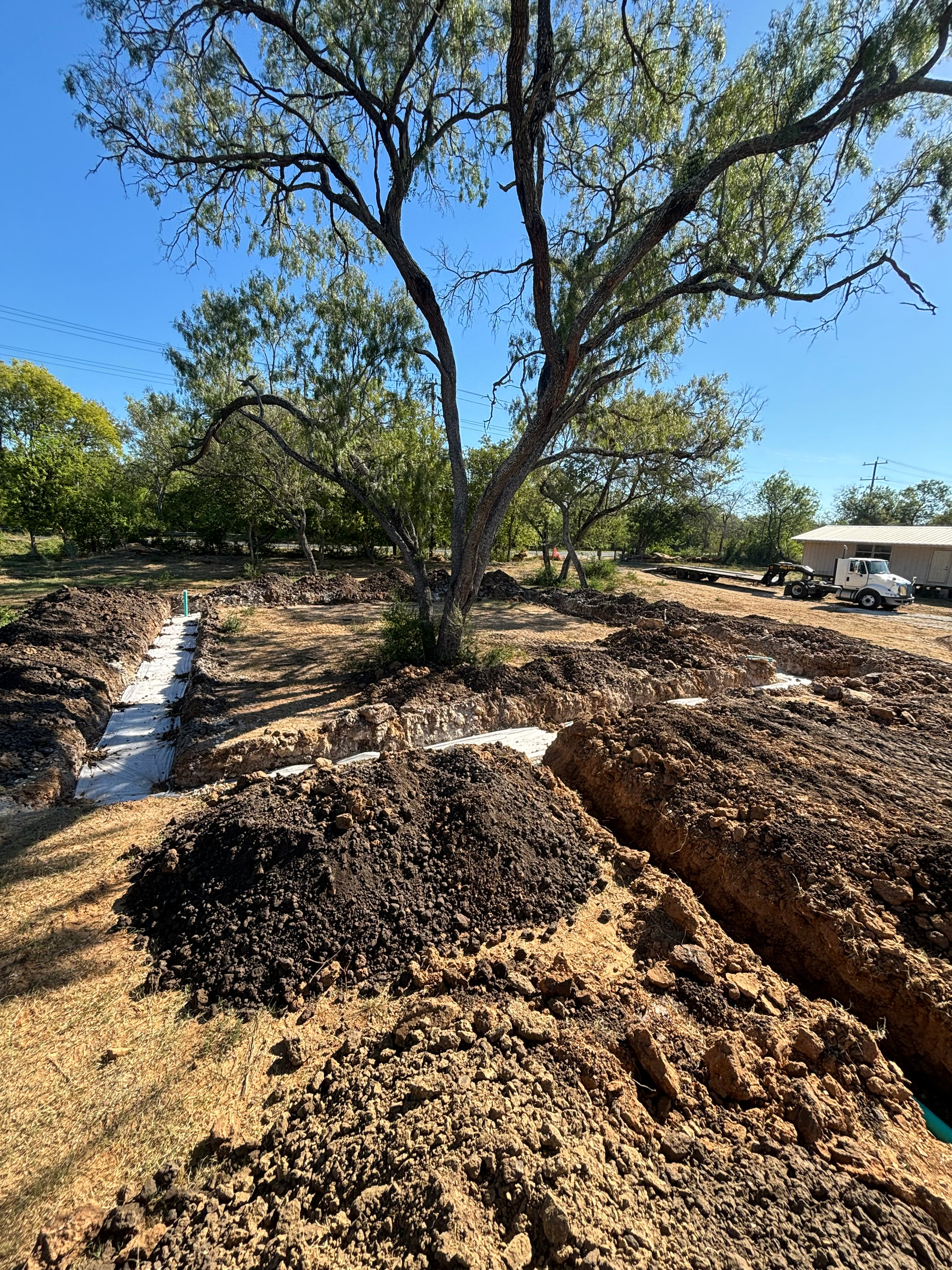
What we install
Conventional systems including pipe and gravel, leaching chambers, and ET beds, plus aerobic systems including spray and drip systems, for residential and commercial properties.
The right one depends on the lot. We look at the property first, then talk you through what fits.
Pipe and gravel
Perforated pipe laid in gravel-filled trenches carries treated water out into the soil.
Leaching chambers
Open-bottom chambers sit in the trench in place of gravel and spread the water over the soil below.
ET beds
Evapotranspiration beds let water leave through evaporation and through the plants growing over the bed.
Aerobic spray and drip
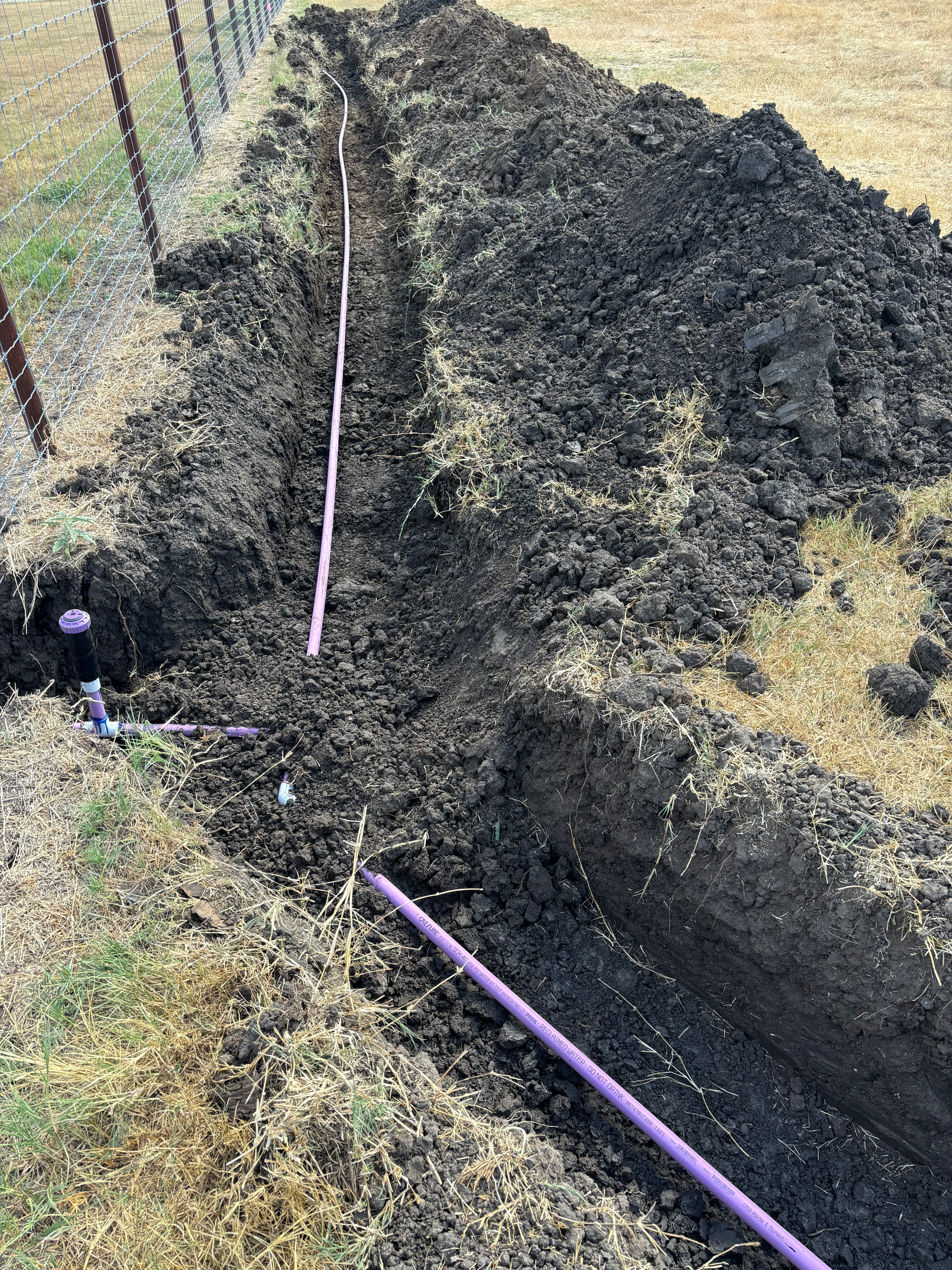
Air-fed treatment in the tank, then the cleaned water goes out through spray heads or buried drip lines.
Conventional or aerobic: how each one works
Conventional systems
A septic tank and a drainfield.
- 1
Wastewater from the house flows into the tank. Solids settle to the bottom and grease and scum float to the top.
- 2
The liquid in the middle flows out to the drainfield: pipe and gravel trenches, leaching chambers or an ET bed.
- 3
The soil does the rest of the treatment as the water soaks in, or in an ET bed, as it evaporates and feeds the plants.
Fewer moving parts. It needs soil that can take the water.
Aerobic systems
An aerobic treatment unit with spray or drip dispersal.
- 1
In the EPA's words, aerobic units "use many of the same processes as a municipal sewage plant, but on a smaller scale. An aerobic system injects oxygen into the treatment tank."
- 2
The oxygen feeds the bacteria that break the waste down. Some systems add a final treatment tank with disinfection.
- 3
The treated water goes out through spray heads over the yard, or through drip lines buried just under the surface.
More parts to look after: an air pump, a control panel and alarm. The EPA notes that "Regular life-time maintenance should be expected." That is where our maintenance contracts come in.
Signs a property needs a new system
You are building where there is no sewer
A new house, shop or RV site out of reach of city sewer needs its own system.
Wet, smelly ground over the drainfield
Soggy patches, standing water or a sewage smell in the yard can mean the drainfield has stopped taking water.
Backups and slow drains all over the house
When every drain is slow or water comes back up, the problem is often past one clogged pipe.
The house has outgrown the system
Added bedrooms, a guest house or more people can be more than an old system was built for.
A damaged or failing tank
Cracks, a collapsed lid or a tank that cannot be fixed means a replacement.
Replacing a tank or a drainfield raises permit questions. Our FAQ on permits covers who issues them.
What to expect during the job
From planning to backfill, we help coordinate the details. A typical install runs like this.
-
01
Look at the site
The property gets looked over: the ground, the slope, and where the house and driveway sit.
-
02
Plan the system
We settle on the system type and layout, and you get a quote.
-
03
Dig and set the tank
The hole is dug, the tank set level and the lines run from the house.
-
04
Lay the field
Trenches, chambers, an ET bed, spray heads or drip lines go in, depending on the system.
-
05
Backfill and start-up
Everything is covered back over and the system is started up.
Who we install for
- Homeowners
- Custom home builders
- RV parks
- Subdivisions
Residential and commercial. No job is too big or too small.
20+ years with a shovel in hand
Our owner learned septic installation alongside his father more than 20 years ago, and started Elite Septic in September 2018. It is still a family-run company based in San Antonio.
Licensed and insured · License MP0002912
Get an installation quote
Tell us where the property is and what you are building.